
What Is Hydrated Lime? Uses and Masonry Grades
Hydrated lime explained: how it is made, what it does in mortar, how Type S differs from mortar types, and what to check before specifying it.
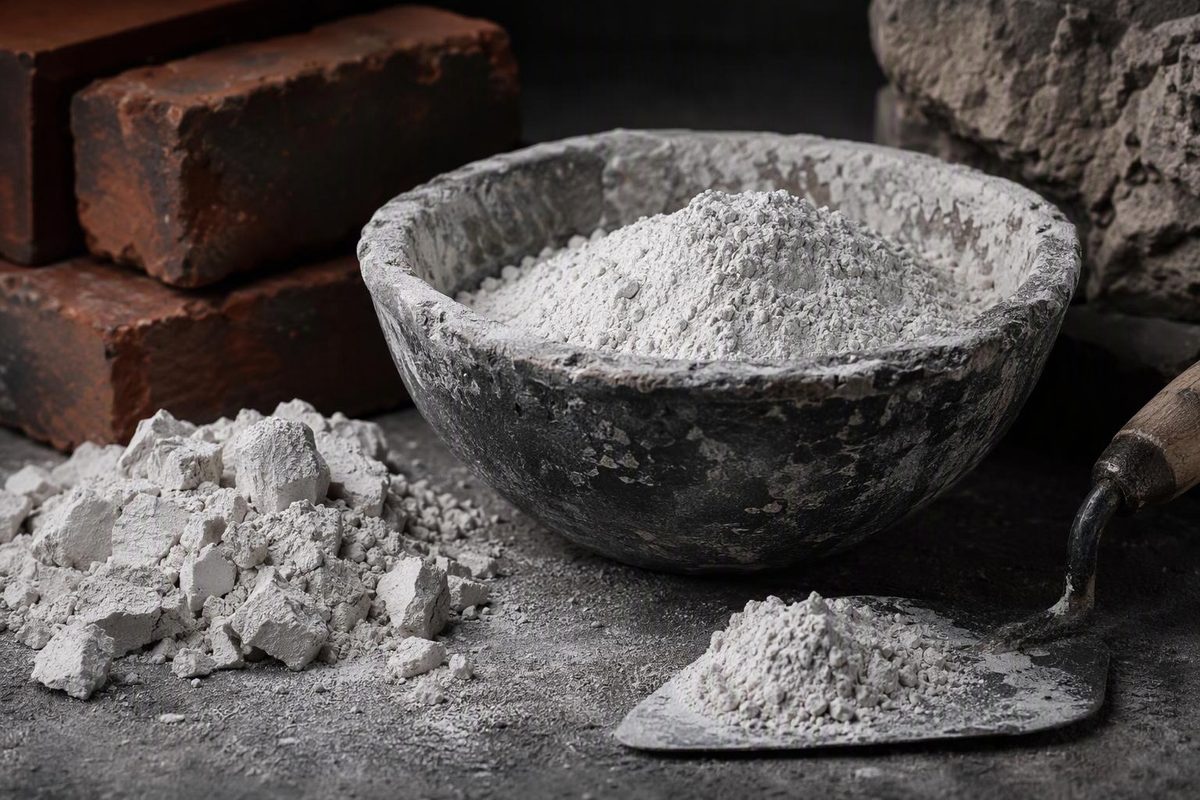
Hydrated lime is lime that has been chemically reacted with water, or “slaked.” High-calcium hydrated lime is calcium hydroxide, Ca(OH)₂: a fine, white powder also called slaked lime. Dolomitic products can contain magnesium hydroxide as well, so not every masonry lime is pure calcium hydroxide. The water used in manufacture is chemically combined; “hydrated” does not mean the bag contains a wet material. NIOSH identifies the compound and its common names; the Canadian Lime Institute explains the high-calcium and dolomitic forms.
In building work, hydrated lime is used in masonry mortar, stucco and plaster. Its practical value is chiefly in how the fresh mix handles and retains water—not simply in making the finished material stronger.
How hydrated lime is made—and hardens
Heating limestone drives off carbon dioxide and produces quicklime. The manufacturer then adds a controlled amount of water to convert the quicklime’s oxides into hydroxides. For high-calcium lime, the simplified reactions are:
- Calcination: CaCO₃ → CaO + CO₂, with heat supplied.
- Slaking: CaO + H₂O → Ca(OH)₂, releasing heat.
The controlled water addition produces a dry powder, not a wet paste. MPA Lime’s explanation of the lime cycle
Factory-produced hydrated lime eliminates the need to slake quicklime on site. It can subsequently be mixed with water to form a paste, or combined with other mortar ingredients. National Park Service Preservation Brief 2
Non-hydraulic lime hardens principally by carbonation: calcium hydroxide absorbs carbon dioxide from the air and becomes calcium carbonate again. This is not merely drying. In a lime-and-sand mortar, overly rapid drying reduces carbonation and can leave poor adhesion and durability. Portland cement in a cement–lime mortar supplies a separate hydraulic hardening mechanism and early strength. The distinction matters when specifying curing and protection: a pure lime mortar should not be treated as though it sets like a cement-rich mix. NPS guidance on lime and mortar curing
What it does in mortar
Hydrated masonry lime helps produce a plastic, workable mortar that can be spread and consolidated into joints. It also improves water retention—the ability of fresh mortar to hold mixing water when placed against an absorptive brick or block. That helps prevent suction from making the mortar prematurely stiff and difficult to bed properly. The National Lime Association’s masonry fact sheet describes these workability, water-retention and bonding functions.
Those benefits do not establish a universal lime dosage. The cement, lime, sand and water must form the specified mortar, rather than an improvised blend chosen only by how it feels on the trowel. For a comparison of the available binder systems, see mortar cement, masonry cement and portland–lime mortar.
For historic repointing, the target is compatibility, not maximum strength. NPS recommends replacement mortar that is softer and more vapor-permeable than the masonry units, and as soft or softer and as vapor-permeable as the historic mortar. An excessively strong or impermeable replacement can transfer damage into the brick or stone. NPS repointing criteria
What “Type S” means on the bag
In U.S. specifications, ASTM C207 covers hydrated lime for masonry purposes, with four designations:
| Lime type | Meaning |
|---|---|
| N | Normal hydrated lime |
| S | Special hydrated lime |
| NA | Normal air-entraining hydrated lime |
| SA | Special air-entraining hydrated lime |
Types S and SA differ from N and NA principally through high early plasticity, higher water retention and limits on unhydrated oxides. Types N and S contain no additives intended to entrain air. ASTM also cautions that some building codes prohibit air-entraining mortar materials because of associated reductions in bond and compressive strength. ASTM C207-24
Type S lime is not Type S mortar. The first identifies one ingredient under C207; the second identifies a finished-mortar category under C270. A bag of Type S lime does not, by itself, determine the mortar type. The NLA masonry fact sheet shows Type S lime used in different cement–lime mortar types. Specify the lime separately from the finished mortar’s proportion or property requirements, using the editions governing the project. ASTM C270-24
Materials that are not interchangeable
- Ground limestone or agricultural lime: usually calcium carbonate, not calcium hydroxide. It is not a substitute for hydrated masonry lime. Canadian Lime Institute
- Quicklime: the unslaked material. Adding water releases substantial heat; do not substitute it into a hydrated-lime mixing procedure. MPA Lime
- Natural hydraulic lime: has a water-reactive set as well as carbonation. “Hydrated” describes slaking; “hydraulic” describes hardening behavior. The terms are not opposites, and the product designation matters more than the word lime. Lime Green’s technical explanation
Handling and specification checks
Hydrated lime is still caustic after slaking. NIOSH lists eye and skin burns and respiratory irritation among its hazards. Control dust, prevent skin and eye contact, and select gloves, eye protection and any respiratory protection through the product safety data sheet and site safety assessment. NIOSH calcium hydroxide guidance
Before ordering, confirm the product’s grade, declared standard compliance and suitability for the specified mortar or plaster. A masonry-lime designation is not a universal plaster specification: C207 points to C206 for finishing hydrated lime and C1489 for lime putty, and says air-entraining lime should not be used as finishing lime. ASTM C207-24
Store bags dry and protected from contamination, and follow the approved mix and curing instructions rather than substituting a general-purpose lime product. NLA storage guidance