
How to Choose the Right Fine Sand for Mortar and Finish Work
The name alone does not establish source rock, particle-size distribution, cleanliness, moisture, color or compliance with a project requirement.
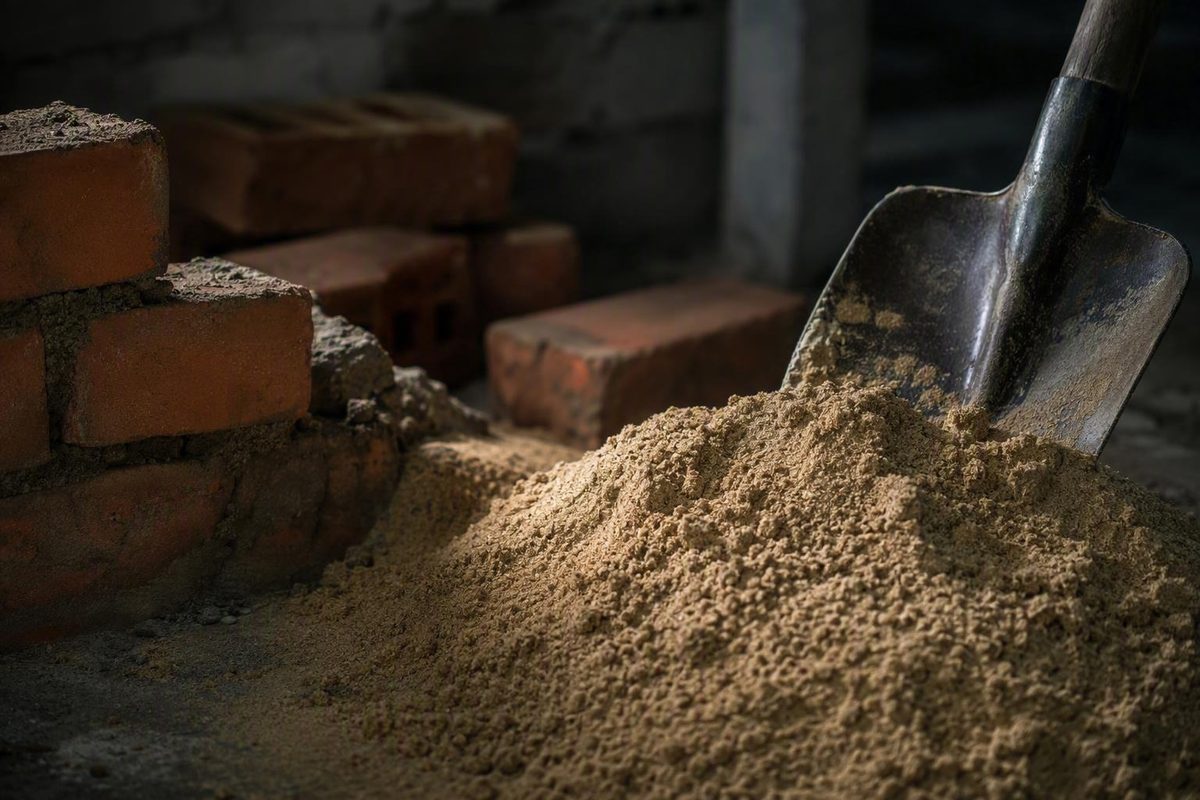
Masonry sand is a useful purchasing category, but it is not a complete specification. The name generally identifies a relatively fine construction sand associated with mortar, smooth finishes, and narrow joints. It does not, by itself, establish source rock, particle-size distribution, cleanliness, moisture, color, or compliance with a project requirement.
That distinction matters because sand performs different jobs in different assemblies. Aggregate that helps mortar spread and finish neatly is not automatically suitable for structural concrete, engineered fill, drainage work, a compacted paver base, a playground, or a stabilized paver joint. Even loads sold under the same name may differ by quarry, processing method, region, and moisture condition.
Use a specification-first selection rule:
- Identify the sand’s exact job.
- Confirm the governing project documents or manufacturer instructions.
- Review current documentation for the actual product and source.
- Inspect the delivered material.
- Estimate quantity from product-specific density or yield.
This guide explains what to ask for and how to compare products. It does not reproduce numerical acceptance limits from material standards; where those limits govern, the current project specification and authorized standard should control.
What masonry sand is—and what the name does not guarantee
Masonry sand—also sold as mason sand or mortar sand—is a relatively fine construction aggregate most consistently associated with mortar for brick, concrete masonry units, and stone. Suppliers commonly use the three names as synonyms rather than as separate technical classifications.
A commonly reported production sequence is to mine or crush suitable rock, wash the material, and screen or classify it to remove larger particles. Depending on the quarry and region, source rock may include granite, limestone, gneiss, quartz-bearing rock, or trap rock. One supplier describes quarry crushing followed by washing and screening while noting that composition depends on the source location (Beavertown Block’s masonry-sand overview).
Not every product follows exactly that sequence. Natural deposits may be processed through washers, screens, tanks, or classifiers rather than being produced entirely by crushing larger rock. The common idea is a relatively fine end product selected for construction uses where workability or finish matters.
Descriptions such as fine, smooth, and consistent distinguish the category from visibly coarser concrete sand. They do not define one universal particle-size distribution. Supplier-published ranges vary, and many retail products disclose no sieve results. A range published for one quarry or bagged product should not be treated as a definition for all masonry sand.
Most importantly, the product name alone does not prove that the material:
- was washed;
- was screened or graded to a specified distribution;
- is free from excessive fines, clay, organics, salts, or other unwanted material;
- has controlled moisture;
- matches a required color;
- complies with ASTM C144 or another project requirement; or
- is suitable for every use mentioned in retailer marketing.
Processing labels also need interpretation. Washed indicates that water-based processing removed at least some fine material or debris, but it does not state how much was removed. Screened indicates that the material passed through size-control equipment, but it does not disclose screen sizes or percentages retained on individual sieves.
For informal landscape work, a seller’s category may be enough to begin the discussion. For specified mortar, restoration, public work, architectural finishes, or assemblies with defined performance requirements, order the required material and documentation—not merely “one load of mason sand.”
Why fine aggregate matters in masonry mortar
Sand is the aggregate in mortar. It is not the binder and does not become mortar simply by adding water. Depending on the specified system, mortar may combine fine sand with Portland cement and hydrated lime, or it may combine sand with manufactured masonry cement or mortar cement.
The aggregate occupies volume and contributes to the fresh mix’s handling characteristics. Its grading and particle character influence how mortar moves under the trowel, fills joints, and responds during tooling.
Supplier guidance commonly associates relatively fine, consistently sized grains with mortar that spreads readily and produces a smoother finish. Fewer coarse particles also mean fewer pebbles dragging through narrow joints or disrupting a clean profile. Cedar Bridge Landscape Supply, for example, describes mason sand as a finishing sand whose smaller grains support spreadable mortar and more even joints (its comparison of mason and concrete sand).
Those are selection principles, not proof that the finest-looking sand is always best. Sand that is excessively uniform or outside the specified grading does not become suitable merely because it feels smooth.
Field-batched and factory-preblended mortar
With field batching, ingredients are proportioned and mixed on site. This arrangement can accommodate local sourcing and project logistics, but it places greater responsibility on the contractor to control the sand source, moisture, measurement, mixing, and batch-to-batch consistency.
Commercial formulations incorporate dried masonry sand with Portland cement and lime, masonry cement, mortar cement, or specialty admixtures. SPEC MIX identifies dried masonry sand in preblended Types M, S, and N mortars, as well as tuckpointing and veneer products (SPEC MIX product guide).
It does not make every preblended mortar equivalent, and it does not establish that separately purchased loose sand meets the requirements applying to a finished mortar product.
Whether the mortar is field-batched or preblended, the specified mortar type and product instructions should control. There is no single cement-to-sand or water ratio suitable for every wall, repair, veneer, plaster, or pointing project. Historic masonry, modern structural masonry, adhered veneer, and cosmetic repairs can have materially different compatibility requirements.
Appearance matters in exposed and matching work
Sand can strongly influence the color and texture of exposed mortar because it is a major constituent and may remain visible at the joint surface. Sakrete’s mortar guidance describes both Portland cement–lime and masonry-cement systems and notes that matching mason sand may help reproduce existing mortar color and texture (Sakrete’s mortar overview).
For visible repairs, do not approve sand solely from a photograph or a dry handful. Obtain a representative sample, make a test panel with the proposed complete mortar system, tool and clean it as intended, and evaluate it after curing.
Mortar aggregate is not concrete coarse aggregate
Mortar and concrete are different formulations. Masonry sand serves as fine aggregate in mortar, where workability and joint finish are central concerns. Concrete commonly uses a designed combination of fine and coarse aggregate. Sand selected for mortar should not be substituted for aggregate specified in structural concrete simply because both products are sold in the same materials yard.
Masonry sand versus concrete, play, all-purpose, and polymeric sand
Retail names overlap, and regional terminology varies. The following table is a selection guide rather than a substitute for product documentation.
| Sand category | General texture | Common role | Typical applications | What must be verified |
|---|---|---|---|---|
| Masonry, mason, or mortar sand | Relatively fine and smooth | Fine aggregate or finish-oriented sand | Brick, block, and stone mortar; some stucco, plaster, stone-setting, and finish work | Gradation, cleanliness, moisture, color, source, and required compliance |
| Concrete sand | Generally coarser and grittier, often with a broader visible particle range | Aggregate or support material where concrete grading, interlock, or drainage matters | Structural concrete mixes, drainage, compacted support layers, and many paver bedding courses | Applicable concrete or bedding specification, source, gradation, and compaction requirements |
| Play sand | Usually marketed as fine and comfortable to handle | Recreational material | Sandboxes, sand tables, and play areas | Product-specific safety information, cleanliness, dust characteristics, and facility requirements |
| All-purpose sand | Variable | Retail convenience category, not a dependable technical class | Filling, landscaping, masonry, or general repairs, depending on the seller | Actual material, intended use, grading, and manufacturer instructions |
| Loose joint sand | Fine enough to enter the intended joints | Fills spaces between pavers | Conventional paver joints where permitted | Paver compatibility, joint dimensions, grading, and installation requirements |
| Polymeric or stabilized joint sand | Purpose-made blend of sand and binding components | Joint stabilization | Paver systems requiring stabilized fill or reduced joint erosion | Paver compatibility, joint dimensions, activation, weather limits, and manufacturer instructions |
Masonry sand is generally described by suppliers as finer and smoother than concrete sand. Concrete sand is commonly recommended for structural concrete, drainage, compacted support, and many paver bedding courses. Silvi Materials makes this functional distinction between finer masonry sand for mortar and finish work and coarser concrete sand for concrete and drainage-oriented construction (Silvi’s sand comparison).
This should not be reduced to “fine is weak” and “coarse is strong.” Performance depends on the complete design, actual gradation, mix proportions or compaction, and the governing requirements. The useful distinction is functional: mortar aggregate, concrete aggregate, structural support, bedding, and joint fill are different roles.
Play sand is a separate purchasing decision
Play sand is marketed for recreational use; masonry sand is marketed primarily as construction aggregate. A smooth feel or masonry-sand label does not establish that a product has been evaluated for children’s play, playground surfacing, animal contact, or indoor recreation.
Commercial recommendations conflict. Some sellers include sandboxes or volleyball courts among masonry-sand uses, while other construction guidance recommends choosing a purpose-marketed play product instead. A contractor comparison distinguishes play sand as a recreational product and masonry sand as construction material, while also acknowledging that processing and labels vary (Leidal & Hart’s masonry-versus-play-sand guide).
Neither category name establishes safety on its own. Verify the actual product’s safety information, cleanliness, dust characteristics, and suitability for the intended setting. Do not infer approval from texture, color, or another seller’s description of a similarly named product.
“All-purpose” may mean almost anything
All-purpose sand is not a reliable technical description. Depending on the retailer, it may refer to mason sand, fill sand, mixed aggregate, or another locally sourced product. Ozinga notes that some products sold as all-purpose sand are uneven fill materials, while mason sand may sometimes receive the same label because of its broad market use (Ozinga’s mason-sand overview).
Compare the product description, intended applications, grading information, and supplier documentation. Similar packaging or adjacent shelf placement does not make products interchangeable.
Joint sand and polymeric sand solve a different problem
Loose masonry sand may be fine enough to sweep into narrow paver joints, and some suppliers recommend it for that purpose.
If the paver manufacturer or project specification requires a proprietary joint product, ordinary masonry sand is not an equivalent substitute. Conversely, polymeric sand should not be installed without confirming compatibility, joint dimensions, activation requirements, and weather limitations.
Across all categories, specification language overrides appearance and store labels.
Where masonry sand fits—and where its use is conditional
The following matrix separates the most consistently documented use from applications that depend heavily on the actual product or assembly. Conditional does not mean prohibited; it means the label alone is insufficient.
| Suitability category | Applications | Selection position |
|---|---|---|
| Well supported | Mortar for brick, concrete block, and stone masonry | The most consistently documented use, subject to the specified mortar system and aggregate requirements |
| Conditional or specification dependent | Stucco, plaster, exposed mortar joints, pointing, stone setting, and architectural finish work | Commonly listed by suppliers, but grading, color, cleanliness, binder compatibility, and system instructions must be confirmed |
| Conditional or specification dependent | Paver bedding | Some suppliers permit masonry sand; others recommend coarser concrete sand. The approved assembly governs |
| Conditional or specification dependent | Paver joint filling | Fine masonry sand may enter narrow joints, but purpose-made or polymeric joint sand may be required |
| Conditional seller-recommended secondary uses | Landscaping, traction, erosion control, pool bases, volleyball courts, sandboxes, playgrounds, litter boxes, and animal areas | Verify cleanliness, safety information, drainage, installation requirements, and suitability for the exposure |
| Not established by the product name alone | Structural concrete, engineered fill, structural paver base, drainage assemblies, and abrasive blasting | Use only where design documents and current material documentation expressly permit the product |
Mortar and finish work
Brick, block, and stone mortar is the clearest application. Stucco, plaster, exposed joints, and some stone-setting systems are also commonly associated with masonry sand because their application and appearance can benefit from controlled fine aggregate.
Even within these uses, the complete system matters. Sand suitable for general masonry mortar may not be appropriate for a thin proprietary finish coat, historic lime mortar, restoration pointing, or a colored architectural joint. Confirm the governing product instructions or specification before assuming that one stockpile can serve every operation.
Secondary landscape and recreational uses
Sellers promote masonry sand for traction, erosion control, landscaping, pool bases, play areas, volleyball courts, and animal environments. These descriptions establish that products are sold into those markets; they do not establish universal approval.
Pool installations may require a particular base material, thickness, compaction method, liner compatibility, or drainage detail. Recreational and animal uses raise separate questions about cleanliness, dust, sanitation, and owner or facility requirements. Landscaping and erosion-control work may require an engineered soil, filter aggregate, or stabilization system rather than unspecified fine sand.
Uses requiring particular caution
Do not place masonry sand into structural concrete, engineered fill, or a drainage assembly unless the design and product documentation allow it. Fine sand selected for a smooth mortar joint does not automatically provide the grading, compaction, drainage, or mix properties required elsewhere.
Product-specific restrictions also matter. A Lowe’s listing describes one bagged Sakrete mason sand as washed and graded for mortar and several secondary uses but expressly says that product is not for abrasive blasting (Lowe’s Sakrete mason-sand listing). That restriction applies to the listed product; it should not be converted into an unsupported universal statement about every material sold as masonry sand.
Pavers: separate the base, bedding course, and joint fill
“Can I use masonry sand for pavers?” is too broad because segmental pavement contains several layers with different functions:
- Prepared subgrade: Existing soil or prepared formation supporting the assembly.
- Compacted structural base: Designed aggregate that distributes loads and creates stable support.
- Bedding or setting course: Controlled material used to seat the pavers and establish a uniform surface.
- Pavers: Concrete, clay, or stone units.
- Joint fill: Material installed between the units to complete the specified system.
Masonry sand must not be presented as a replacement for a properly designed and compacted structural base. Fine loose sand and compacted graded base perform different jobs. If the drawings require crushed aggregate, dense-graded base, or another engineered material, an order for generic “paver sand” does not satisfy that requirement.
Bedding recommendations are not uniform
Some suppliers list masonry sand beneath pavers or stepping stones. Others recommend coarser concrete sand for the bedding layer and reserve masonry sand mainly for joints or finish work. The disagreement may reflect local materials, climate, paver systems, terminology, and installation practice.
Ask a layer-specific question: Is this material approved for the bedding course in this exact paver system? The answer should come from the project detail, paver manufacturer, applicable installation requirements, and local conditions—not only from a supplier’s general uses list.
The bedding layer should not become a way to correct an improperly built base. Excessive or uneven loose material creates a different assembly from the one shown in the construction documents.
Joint fill is a separate selection
Fine masonry sand is sometimes recommended for narrow joints because smaller particles can enter openings that reject coarser grains. That may be acceptable in systems designed for conventional loose joint fill.
Other systems require polymeric sand or another purpose-made joint product.
Before ordering material labeled paver sand, identify:
- whether it is intended for the structural base, bedding, leveling, or joints;
- the required grading for that layer;
- whether stabilization is required;
- whether the paver manufacturer names an approved material;
- whether drainage conditions affect the selection; and
- whether local installation requirements apply.
A layer-by-layer purchase order is clearer than one line for “sand for pavers.”
Processing labels and standards: what to verify
Processing words provide useful clues, but they do not replace test information.
Washed
Washed generally indicates that water-based processing removed at least some fine material or debris. It does not disclose the starting material, effectiveness of washing, remaining contaminant content, or final grading.
If the project limits clay, silt, organics, salts, or other constituents, request documentation addressing those requirements directly.
Screened or graded
Screened indicates separation through one or more screen sizes. Graded suggests control of particle distribution. Neither word reveals the percentages passing or retained on the relevant sieves.
A screened product may still be unsuitable for a particular specification. The useful evidence is a current sieve analysis or gradation report representing the actual source and product.
Dried
Dried means that moisture has been reduced. This may support bag storage and more predictable batching, but it does not prove cleanliness, grading, or suitability for a specified mortar.
Moisture can change after outdoor storage or bulk delivery. Washed should not be confused with wet, and dried should not be confused with specification compliant.
ASTM C144 and ASTM C270 are not interchangeable references
For purchasing purposes, ASTM C144 is the reference commonly associated in the supplied product materials with aggregate for masonry mortar, while ASTM C270 is cited for finished mortar requirements. This guide does not reproduce or independently interpret either standard’s numerical criteria. Consult the current authorized standards and project documents where compliance is required.
A retailer listing illustrates why the references should not be treated as equivalent. Menards describes one 50-pound bagged mason sand as screened, washed, and dried and claims that it meets or exceeds ASTM C144. A separate specifications field references ASTM C270 (Menards’ mason-sand listing). Those retailer-supplied statements concern different product attributes and should not be treated as interchangeable proof.
Similarly, documentation that a factory-preblended mortar meets a mortar requirement does not automatically certify a separate pile of loose sand from another source.
What to request
For specified work, request a current certificate of compliance, supplier test report, or gradation report addressing the actual project requirement. Check:
- Product identity: Does the report name the material being delivered?
- Source: Does it identify the quarry, pit, plant, or production location?
- Test date: Is the information current for the project and represented material?
- Applicable specification: Does the report cite the requirement in the contract documents?
- Particle distribution: Does it report results across the relevant sieves?
- Listed contaminants or deleterious material: Does it address constituents limited by the specification?
- Authorized statement: Is the compliance claim tied to the responsible supplier or testing entity?
- Lot relationship: Is there a traceable connection between the report and delivered material?
Do not borrow acceptance limits from an unrelated product sheet or generic online range. The architect, engineer, code, owner’s specification, mortar manufacturer, or paver manufacturer controls where a defined material is required.
If critical work lacks adequate documentation, obtain project approval, arrange appropriate testing, or choose a product with clearer evidence. Do not infer compliance from the name.
How to inspect and order masonry sand
A careful order connects the documented product to its exact job before bags are loaded or a truck is dispatched.
Pre-order checklist
Confirm:
- Intended use: Mortar aggregate, plaster, stucco, bedding, joint fill, landscape work, or another function.
- Governing requirement: Project specification, drawing note, approved submittal, code provision, or manufacturer instruction.
- Required documentation: Certificate of compliance, sieve analysis, source information, safety data, or product data sheet.
- Source: Quarry, pit, plant, and whether it may change during the project.
- Color and appearance: Especially for exposed mortar, pointing, restoration, and architectural finishes.
- Moisture condition: Dried bagged material, covered stock, or outdoor bulk sand with variable moisture.
- Unit of sale: Bag weight, cubic foot, scoop, cubic yard, ton, bulk package, or truckload.
- Delivery terms: Access, unloading location, minimum order, lead time, waiting charges, and responsibility for site protection.
- Quantity basis: Whether the seller’s figure describes loose, compacted, or installed material.
- Continuity: Whether enough material from one source or lot can be reserved for appearance-sensitive work.
For restoration or visible work, request a sample before placing the full order. Make a test panel using the proposed binder, pigment, water source, tooling, and cleaning procedure. Dry sand alone cannot reliably predict the finished joint.
Incoming-material checklist
Inspect bags or bulk material before acceptance and before mixing it into the work:
- Does the product name match the purchase order and delivery ticket?
- Is the source the one approved in the submittal?
- Are bags damaged, wet, torn, mislabeled, or contaminated?
- Is bulk sand unusually wet, crusted, frozen, or segregated?
- Are clay clumps, organic debris, trash, or foreign materials visible?
- Are unexpected oversized particles present?
- Is there an unusual amount of very fine dust?
- Does the color differ materially from the approved sample or previous delivery?
- Has another stockpile been mixed into the load?
- Does the ticket state the ordered unit and delivered quantity?
- Are required reports available and traceable to the delivery?
Do not wait for inconsistent mortar to appear in the wall before investigating an obvious change. Isolate questionable material and resolve the discrepancy with the supplier and project authority before use.
Bagged versus bulk
Documented retail formats include 50-pound bags, sales by the ton, approximately one-cubic-yard scoops, and large bulk packages. One Home Depot listing describes a nominal 1,000-pound bulk washed masonry-sand product while giving a broader package range of 1,000 to 1,200 pounds (Home Depot’s bulk masonry-sand listing).
Bagged material generally suits small repairs, occupied sites, constrained access, and work where controlled handling is valuable. Bags can simplify counting and weather protection, although identical bag weights do not guarantee identical volume or yield across products.
Bulk material may be more practical for large walls, plaster work, or extensive site operations. It also introduces questions about truck access, unloading, stockpile protection, minimum quantities, delivered moisture, scale tickets, and verification of volume or weight.
Do not compare prices until units, delivery, taxes, minimums, moisture basis, and stated quantity have been normalized. Retail prices, rebates, inventory, yields, and delivery terms are local and time-sensitive, and listings may contain conflicting figures. The current written quote and purchase order should control.
Estimating quantity and handling the material responsibly
Begin quantity estimating with geometry rather than a retailer’s coverage slogan.
For a uniform layer:
Required volume = project area × installed depth
Use compatible units. If area is measured in square feet, convert depth to feet before multiplying; divide a depth stated in inches by 12. Divide irregular areas into measurable rectangles, triangles, or other shapes and combine their volumes.
For mortar production, base the sand quantity on the specified mortar system, masonry quantity, joint geometry, waste conditions, and verified yield information. Brick size and joint dimensions affect the calculation; coordinated brick dimensions and joint geometry are therefore more useful than a universal “bags per brick” rule.
Converting volume to weight or bags
Converting volume to tons, scoops, or bags requires product-specific information, such as:
- documented bulk density for the supplied material and moisture condition;
- verified weight per delivered volume;
- manufacturer-stated bag yield; or
- a supplier calculation tied to the actual product and sales unit.
Then allow for project-specific compaction, settlement, moisture, spillage, trimming, cleanup, and waste. No single adjustment percentage applies to every operation. Bedding, loose joint filling, mortar batching, and bulk stockpiling do not undergo the same losses or volume changes.
Liberty Landscape Supply provides one narrow example: it describes a scoop as approximately one cubic yard and estimates coverage of 100–125 square feet at a depth of two to three inches before compaction (Liberty’s masonry-sand listing). Because both depth and coverage are ranges and the estimate is expressly pre-compaction, it is not a universal coverage rule.
Retail data also require plausibility checks. The Menards listing cited above states a 0.4-cubic-foot yield but separately displays a coverage figure of 0.5 without a visible unit. An estimator should not guess what the second number means; obtain written clarification or calculate from a reliable product-specific quantity.
Moisture and mortar water
Sand moisture affects batching. Damp aggregate already contributes water, while dry aggregate may change apparent water demand. Do not respond with a universal water addition. Follow the mortar manufacturer’s instructions, project quality-control procedure, and required consistency.
Where consistent proportions matter, control the measurement method and monitor changing stockpile conditions.
Dust and safe handling
Minimize dust, consult current safety data for each product, and follow applicable occupational requirements and the site’s compliant exposure-control procedures.
Retail mixing guidance lists goggles, gloves, long sleeves, and respiratory protection among precautions for dry mortar ingredients (Home Depot’s mortar-mixing guidance). Treat that as general retailer guidance, not a complete exposure-control program. Product safety data, the task, equipment, working environment, and applicable workplace rules should determine the required controls.
Frequently asked questions
Is masonry sand the same as mason sand or mortar sand?
Usually, yes. Suppliers commonly use masonry sand, mason sand, and mortar sand as synonymous retail names for relatively fine construction sand used in mortar.
The shared name does not make every product identical. Source rock, processing, color, grading, cleanliness, and moisture can vary among suppliers and regions. For specified work, compare documentation rather than names.
Does all masonry sand meet ASTM C144?
No. A masonry-sand label does not establish ASTM C144 compliance. Some products expressly claim compliance, while others provide no standard reference, sieve analysis, or certificate.
Where ASTM C144 or another requirement is specified, request current documentation tied to the actual product and source. A separate reference to a finished-mortar requirement should not be treated as independent proof that loose sand satisfies the aggregate specification.
Can masonry sand be used under pavers?
Sometimes, but identify the exact layer. Masonry sand must not replace the properly designed and compacted structural base.
Some suppliers allow it in a bedding or setting course, while others recommend coarser concrete sand. Fine masonry sand may also be acceptable as loose joint fill in some systems, but polymeric or purpose-made joint sand may be required. Follow the project details, paver manufacturer’s instructions, and local requirements.
How much masonry sand do I need?
For a uniform layer, multiply project area by installed depth after converting all dimensions to compatible units. That produces volume.
Convert volume to tons, scoops, or bags using the actual product’s documented density, delivered quantity, or stated yield. Then account for project-specific compaction, moisture, spillage, and waste. Do not assume that every cubic-yard scoop, ton, or same-weight bag provides identical installed coverage.
Can masonry sand be used in a sandbox or play area?
Do not decide from the name or texture alone. Some sellers recommend masonry sand for sandboxes, playgrounds, or volleyball courts, while other commercial guidance recommends purpose-marketed play sand.
Verify the actual product’s safety information, cleanliness, dust characteristics, and suitability for the intended setting. Facility, owner, playground, and local requirements should control. Neither a masonry-sand label nor a play-sand label independently establishes safety for every use.
The final purchasing sequence is straightforward:
- Identify the sand’s exact job.
- Separate structural layers from bedding, joint, mortar, and finish functions.
- Confirm the governing drawing, specification, standard, or manufacturer instruction.
- Review current documentation for the actual source and product.
- Inspect the delivered material against the approved sample and ticket.
- Calculate quantity from installed dimensions and product-specific density or yield.
- Store and handle the material to control moisture, contamination, and dust.
Masonry sand is a strong general category for mortar and finish work. Its name alone, however, is not proof of grading, compliance, cleanliness, safety, or suitability for every application.