
Calculate the Duty Before Pricing Canadian Plywood
Estimate the conditional 50% Canadian plywood duty per sheet, compare plywood and OSB project costs, and see which classifications need verification.
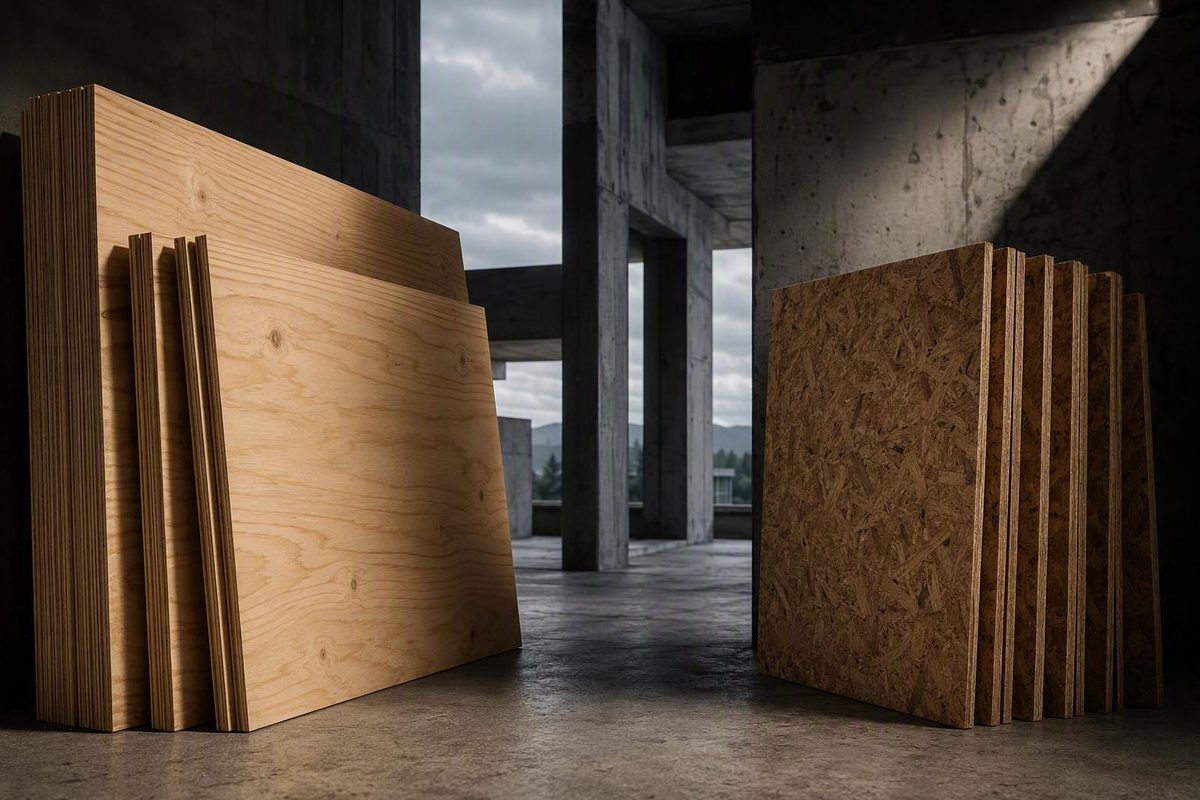
A covered Canadian plywood sheet incurs an additional duty equal to 50% of its entered customs value, not 50% of its store price. If the entered value is $30 per sheet, the conditional duty is $15. There is no universal dollar cost per sheet because customs value varies, and the exact HTS classification, origin, entry date, and Annex II coverage must be confirmed.
Enter the project area, sheet coverage, thickness, customs value, and competing quotes; the calculator shows sheet count, conditional duty, total cost, and the lowest known option.
Use entered customs value for the duty calculation and actual delivered quotes for product comparison. Thickness is recorded so the three quotes can be checked for equivalence; no thickness-based rate is assumed.
The evidence supplies no nationwide domestic-plywood or OSB price. Enter current quotes for panels that satisfy the same project specification.
| Option | Sheets | Base Price/Sheet | Duty/Sheet | Compared Cost/Sheet | Project Total |
|---|---|---|---|---|---|
| Canadian plywood Unverified | — | — | $15.00 scenario | — | — |
| Domestic plywood | — | — | $0 under this Canadian measure | — | — |
| OSB | — | — | Not identified on supplied list | — | — |
Source note: conditional 50% rate and covered-product framework from the presidential proclamation and supplied trade reporting. The supplied evidence provides no nationwide domestic-plywood or OSB prices and does not independently verify a particular panel’s Annex II coverage.
The calculator keeps the customs duty separate from the price charged by a supplier. That distinction matters: an importer, distributor, or retailer may pass through all, part, or none of the duty, and a quoted price can include freight, handling, inventory costs, and margin.
The reported measure covers qualifying Canadian plywood, veneered panels, LVL, particleboard, MDF, and other listed products. Published reporting does not identify OSB as covered by this particular list. Canadian softwood lumber is also separate and remains subject to its own trade measures rather than this plywood calculation.
The Per-Sheet Calculation Uses Customs Value
For a panel confirmed to be covered at 50%, use:
Duty per sheet = entered customs value per sheet × 50%
If entry records provide only a shipment value, first calculate:
Entered customs value per sheet = applicable entry-line customs value ÷ equivalent sheet count
Then multiply the per-sheet value by the confirmed rate. The presidential proclamation describes the additional duty for products listed in Annex II as 50% ad valorem, meaning 50% of customs value rather than a fixed charge per panel. The Federal Register page also cautions that its web rendition is unofficial and links to the official PDF with the presidential proclamation.
| Entered Customs Value per Sheet | Conditional Calculation | Additional Duty |
|---|---|---|
| $20 | $20 × 50% | $10 |
| $30 | $30 × 50% | $15 |
| $40 | $40 × 50% | $20 |
| $50 | $50 × 50% | $25 |
These are arithmetic illustrations, not tariff quotes. Each assumes that the panel has the relevant Canadian origin, appears in Annex II, entered while the measure applied, and remains subject to a confirmed 50% rate.
For example, an entry containing 400 equivalent covered sheets with a customs value of $12,000 has a $30 value per sheet. At 50%, the additional duty would be $15 per sheet and $6,000 for the shipment.
Mixed shipments should be calculated by entry line. Do not average panels with different products, dimensions, grades, origins, classifications, or assigned values unless the importer or broker confirms that allocation.
A Shelf Price Does Not Reveal the Customs Duty
Multiplying a retail price by 50% answers only what half of that retail price is. It does not establish the government assessment.
A shelf or delivered price can include:
- customs value and applicable duties;
- freight, warehousing, and handling;
- inventory carrying costs;
- distributor and retailer margins;
- local delivery or break-bundle charges;
- an explicit tariff surcharge; and
- price changes unrelated to the duty.
Keep three figures separate in the estimate:
| Figure | Meaning | Supporting Record |
|---|---|---|
| Customs duty | Amount attributed to the covered entry line | Entry documentation and customs instructions |
| Supplier cost change | Change in the supplier’s landed or operating cost | Written surcharge or cost breakdown |
| Buyer price change | Difference between current and baseline quotes | Comparable dated quotes |
A sheet advertised at $60 does not automatically carry a $30 duty. It could hypothetically reflect a $30 customs value, a $15 duty, and $15 in downstream costs and margin. It could also be domestic material, earlier inventory, or a panel with a different customs value or classification.
If the importer will not disclose customs value, request the duty dollars allocated per sheet, complete HTS classification, claimed origin, entry date, and authority for the surcharge. Without that support, identify the amount as a supplier surcharge or estimating allowance, not a verified customs assessment.
Coverage Must Be Confirmed Before Applying 50%
HBS Dealer, summarizing an industry update, identifies plywood among the Canadian building products reportedly subject to the additional 50% duty. It also reports that preferential USMCA qualification alone does not exempt products covered by this measure in its tariff and regulatory update.
Coverage nevertheless depends on the exact product and classification. The supplied Federal Register webpage does not reproduce Annex II, so it cannot establish whether a particular plywood HTS code is included. The Architect’s Newspaper reported that 36 plywood types were affected, but its account does not provide the complete classification list in its report on implementation.
Confirm these inputs before carrying the duty in a binding price:
- Complete HTS classification.
- Documented country of origin.
- Panel construction, species, grade, thickness, and dimensions.
- Coverage under the complete Annex II.
- Entered customs value for the relevant entry line.
- Entry date and status.
- Current CBP implementation instructions, corrections, or exclusions.
Shipment from Canada does not by itself establish Canadian origin. Likewise, a product sold as “Canadian plywood” is not a sufficiently precise customs description. Obtain the importer’s or broker’s documented classification and origin position.
Do not collapse structural plywood, decorative plywood, veneered panels, and engineered wood products into a single tariff category. Similar-looking panels can differ in construction, classification, and duty treatment.
When coverage remains unresolved, use conditional bid language:
If HTS classification __ is covered at a confirmed rate of _%, and its entered customs value is $ per sheet, the additional duty would be $___ per sheet.
The Sources Report Two August Start Dates
The proclamation states that the additional duty applies to covered goods entered for U.S. consumption on or after August 19, 2026. HBS Dealer also described August 19 as the scheduled effective date.
The Architect’s Newspaper reported that the duties were temporarily offset on August 18 and enforced four days later, indicating an August 22, 2026 enforcement date. The available evidence does not include the CBP instructions needed to resolve treatment for every entry during that interval.
For a shipment near either date, obtain:
- the entry number, line, date, and status;
- the complete HTS classification;
- the duty or deposit shown on entry documentation; and
- the implementation message used by the broker.
A purchase-order, export, arrival, invoice, or delivery date is not necessarily the controlling entry date. Earlier domestic inventory also presents a separate pricing issue: a seller may price it at replacement cost even if that inventory did not incur the additional duty.
OSB and Softwood Lumber Require Separate Treatment
OSB should not automatically receive the plywood rate. It is a strand-based structural panel rather than plywood, and it is not identified in the supplied published list of affected products. Its exact classification and current treatment should still be verified before it is treated as duty-free.
| Product | Estimating Treatment |
|---|---|
| Plywood | Verify the HTS code and Annex II coverage |
| Veneered panel | Do not assume the plywood classification |
| LVL | Reported among affected products; classify separately |
| Particleboard or MDF | Reported among affected products; classify separately |
| OSB | Not identified on the supplied published list; verify independently |
| Canadian softwood lumber | Keep outside the plywood calculation |
Canadian softwood-lumber rates circulating in construction reporting are not plywood rates. The National Association of Home Builders reported preliminary antidumping and countervailing rates totaling 25.9%. It said a separate 10% Section 232 tariff would produce a stated total of 35.9%, while emphasizing that the preliminary rates were not final in its lumber-market update.
Those figures cannot be transferred to plywood merely because both products contain wood. The proclamation excludes articles subject to Section 232 duties from its additional measure, while HBS Dealer reports that Canadian softwood lumber is outside the 50% measure because it is already subject to Section 232 restrictions.
Do not automatically stack Section 232, Section 301, antidumping, or countervailing rates onto plywood. For each entry line, determine whether the classification is in Annex II, whether another measure applies, whether an exemption exists, and whether current instructions permit the duties to be combined.
Compare Sheathing Options Using Delivered Costs
Switching from Canadian plywood to domestic plywood or OSB beats paying the duty only when the substitute meets the project specification and has a lower comparable delivered cost.
For Canadian plywood, compare:
Pre-duty delivered price + verified duty per sheet + other documented charges
For domestic plywood or OSB, compare the current delivered quote for the same required sheet count. Match thickness, structural rating, exposure classification, span requirements, fastening assumptions, waste, and availability before choosing the lowest number.
The supplied evidence does not provide nationwide domestic-plywood or OSB prices, so no defensible universal break-even price is available. The calculator therefore requires the user’s actual quotes rather than inserting unsupported market averages.
The basic break-even test is:
Switch when substitute cost per sheet is lower than Canadian pre-duty cost per sheet plus the verified duty, after accounting for specification and quantity differences.
If covered Canadian plywood has a $30 customs value, its conditional duty is $15. A substitute is financially lower only if its comparable delivered price is below the Canadian option’s pre-duty delivered price plus that $15. A cheaper panel that does not satisfy the assembly specification is not a valid substitute.
Build the Tariff Allowance From Entry Documents
For a bid or purchase order, record the manufacturer, product, construction, grade, thickness, dimensions, intended use, quantity, origin, HTS classification, and entry status. Then obtain the relevant customs value rather than using the retail quote.
Calculate and reconcile both methods:
Shipment duty = entered customs value × confirmed rate
Duty per sheet = shipment duty ÷ equivalent sheet count
The result should equal entered customs value per sheet multiplied by the same rate. Model the supplier’s pass-through separately from the documented customs amount.
Retain the commercial invoice, packing list, product specification, origin statement, entry-line information, classification, applicable proclamation and annex, implementation instructions, currency-conversion information, and supplier surcharge explanation.
A concise allowance can state:
Tariff allowance assumes HTS classification __, origin _, entry status/date , customs value of $ per sheet, and a confirmed additional duty rate of %. Calculated customs duty is $ per sheet. Supplier pass-through is modeled separately at $___ per sheet.
If classification coverage or customs value is unknown, present a labeled scenario rather than an authoritative cost. Confirmation from the importer, customs broker, trade counsel, or CBP is appropriate before the result enters a binding bid.